Source Semi Hanging Farm Cultivator for Agriculture Forestry Aquaculture
Compare 30 Semi Hanging Farm Cultivator models from Chinese manufacturers. These machines support dry cultivating, soil preparation, and trenching with tractor or diesel power sources for forestry, fisheries, and agriculture applications.
Key considerations
Products List


High Quality Agricultural Machinery Crawler Cultivator Farm Cultivator
$3150.00 - $5850.00
MOQ: 1 Pieces


Advanced Rotary Cultivator with Adjustable Speed for Efficient Farming
$1579.00 - $1699.00
MOQ: 1 Sets


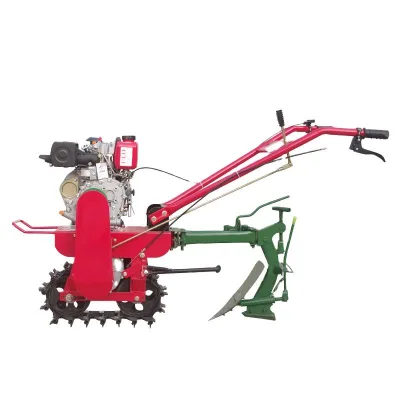
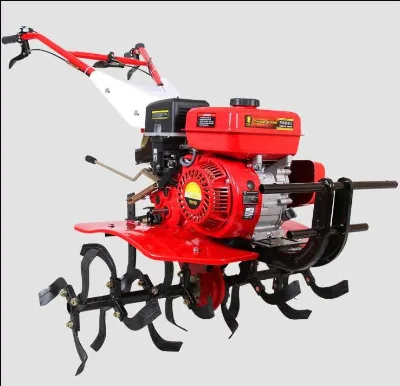


Comprehensive Sourcing Guide
Strategic Sourcing Guide for Semi-Hanging Farm Cultivators
The global agricultural machinery market continues to evolve with a specific focus on equipment that balances high efficiency with operational flexibility. For buyers researching the core keyword "Semi Hanging Farm Cultivator," the procurement landscape is defined by a diverse array of configurations, from tractor-mounted units to specialized crawler-based systems. This guide synthesizes observed market data and technical specifications to provide a disciplined framework for sourcing these machines. The objective is to equip procurement professionals with the knowledge to evaluate products based on verified attributes, ensuring that purchasing decisions align with specific operational requirements in forestry, fisheries, and general agriculture.
Technical Specifications and Configuration Analysis
Understanding the technical architecture of a semi-hanging cultivator is the first step in any sourcing strategy. The term "semi-hanging" often implies a hybrid mounting system where the machine is partially suspended or attached via a three-point linkage, allowing for adjustable depth and angle. However, the market data reveals a broader spectrum of configurations that buyers must distinguish. For instance, specific models are identified with the designation "1BQX-1.1," "1BQX-1.3," and "1BQX-1.5," indicating a series of rotary tillers designed for varied soil conditions. These units typically feature a vertical shaft arbor configuration, which is critical for effective soil turnover and root management.
Power sources are a primary differentiator in this category. The observed product range includes both diesel-powered engines and tractor-take-off (PTO) driven units. Diesel-powered models, such as those featuring a single-cylinder engine running at 2200 RPM, offer self-contained mobility, making them ideal for areas where tractor availability is limited. In contrast, tractor-mounted options rely on the host vehicle's power, often requiring a power rating between 25-35 HP for smaller units like the RTG230, or up to 80-100 HP for larger, high-capacity tillers.
The working width and blade configuration are equally vital for throughput calculations. Market observations list working widths ranging from 1200mm to 2300mm. A 2300mm working width unit, for example, is equipped with 54 blades, suggesting a heavy-duty application for large-scale land preparation. Conversely, smaller units with a 1200mm width may feature 36 blades, suitable for narrower rows or smaller plots. The drive type is predominantly gear drive, ensuring robust torque transmission, while traction types vary between "Traction" and "Hanging" configurations. Buyers must verify the specific traction mechanism against their field conditions, as some units are designed for continuous running operation, while others are optimized for movable operation.
Compliance, Certification, and Regulatory Standards
Navigating the regulatory landscape is essential for international procurement. The supply chain data indicates that products often originate from specific manufacturing hubs in China, such as Shan Dong and Xingtai City, Hebei Province. When sourcing from these regions, buyers must rigorously verify compliance with international standards. The observed product listings frequently reference SGS and ISO9001:2015 as production standards. These are not merely marketing terms but indicators of a manufacturer's commitment to quality management systems and product safety.
Certification status is another critical verification point. While "CE" certification is observed in the background data, it should not be assumed as a universal attribute for every listed product. Buyers must explicitly request current certification documentation for the specific model being purchased. The absence of a specific certification claim in a product description should trigger a request for proof rather than an assumption of compliance. Furthermore, the "Standard Export Package" and "Iron Case" or "Wooden Cases" mentioned in the data highlight the importance of packaging standards, which often serve as a proxy for the manufacturer's attention to detail and logistics readiness.
Cost Drivers and Pricing Dynamics
The pricing structure for semi-hanging farm cultivators is influenced by a complex interplay of factors, including material composition, power output, and customization capabilities. The observed price range in the market spans from $128 to $5,850 USD. This wide variance reflects the difference between basic, lightweight tillers and heavy-duty, high-horsepower machines. The "Affordable" attribute noted in some listings suggests a competitive market for entry-level equipment, but buyers should be cautious not to equate low cost with low quality without verifying the material specifications.
Material is a primary cost driver. The majority of the observed cultivators are constructed from steel, a choice that balances durability with cost-effectiveness. However, the thickness of the steel, the quality of the welding, and the treatment of the blades (e.g., heat treatment) are not always detailed in standard listings. These hidden variables significantly impact the machine's lifespan and maintenance costs. Additionally, the "Customization: Available" attribute indicates that buyers can negotiate modifications, which will inevitably affect the final price. Custom requests, such as specific packing requirements or unique color schemes like the observed "Red" finish, may incur additional charges.
Typical Applications and Operational Versatility
The versatility of semi-hanging cultivators makes them suitable for a wide array of agricultural and industrial applications. The data explicitly lists "Forestry," "Fisheries," "Livestock," "Aquaculture," and "General Agriculture" as key application fields. This broad scope suggests that these machines are not limited to traditional row-crop farming. For instance, the "Dry Cultivating Machinery" classification points to specific use cases in arid or semi-arid regions where water conservation is critical.
The functional capabilities of these machines further expand their utility. Beyond standard land cultivation, the observed units are capable of trenching, backfilling, and weeding. This multi-functionality is particularly valuable for buyers looking to minimize capital expenditure by acquiring a single machine that can perform multiple tasks. The "Working Time: Adjustable" feature allows operators to tailor the machine's performance to the specific soil density and crop requirements, enhancing efficiency. Whether the application involves preparing arable land for planting or maintaining channels in aquaculture facilities, the adaptability of the semi-hanging design is a key asset.
Supplier Evaluation and Business Model Assessment
When evaluating potential suppliers, buyers should prioritize manufacturers who demonstrate transparency in their business model and production capabilities. The data identifies the "Business Type" as "Manufacturer," which is a positive indicator of direct control over the supply chain, potentially leading to better pricing and more reliable lead times compared to trading companies. However, buyers must verify this claim through due diligence, such as requesting factory audits or video tours.
The "MOQ: 1PC" observation is significant for small-scale buyers or those testing new markets. A Minimum Order Quantity of one piece allows for low-risk procurement and the ability to evaluate a single unit before scaling up. However, this flexibility may come with a higher unit price compared to bulk orders. Buyers should also consider the "Shipping: by Sea" logistics, which implies that lead times will be longer than for air freight or domestic delivery. Understanding the shipping terms and the specific origin location (e.g., Shan Dong vs. Xingtai City) is crucial for calculating total landed costs and planning inventory.
Quality Control and Long-Term Procurement Considerations
Ensuring long-term value requires a proactive approach to quality control. The "Core Component: Diesel Engine" and "Gear Drive" are critical areas where quality can vary significantly between manufacturers. Buyers should insist on detailed specifications for these components, including brand, warranty, and serviceability. The "Advantage: High Efficiency, Easy to Operate" claims observed in the market should be validated through performance testing or third-party reviews before finalizing a purchase.
Packaging standards also play a role in quality assurance. The distinction between "Standard Export Package Iron Case" and "Wooden Cases" suggests different levels of protection during transit. For heavy machinery, wooden cases often provide superior protection against moisture and impact, which is vital for maintaining the integrity of the steel components and the engine. Buyers should specify their packaging requirements clearly, as the data indicates that "Customers Requirement" is an accepted option.
Comparative Analysis of Key Specifications
To facilitate decision-making, the following table summarizes the key technical specifications observed across different product models. This comparison highlights the diversity in power, size, and configuration available in the current market.
| Specification | Model Series A (e.g., 1BQX) | Model Series B (e.g., SC) | Model Series C (e.g., RTG230) |
|---|---|---|---|
| Power Source | Diesel / Tractor | Diesel / Tractor | Diesel / Tractor |
| Working Width | Variable (Standard) | 2300mm | 1200mm |
| Power Output | 25-35 HP to 80-100 HP | 80-100 HP | 25-35 HP |
| Blade Count | Variable | 54 | 36 |
| Weight | 570kg (Observed) | Variable | Variable |
| Drive Type | Gear Drive | Gear Drive | Gear Drive |
| Traction Type | Traction / Hanging | Hanging | Hanging |
| Origin | Shan Dong / Hebei | Xingtai City, Hebei | China |
| Certification | SGS, ISO9001:2015 | SGS, ISO9001:2015 | CE (Verify) |
Final Procurement Recommendations
Sourcing a semi-hanging farm cultivator requires a balance of technical due diligence and strategic supplier selection. Buyers must move beyond generic marketing claims and focus on the specific attributes that align with their operational needs. The availability of customization, the range of power options, and the diverse application fields offer significant opportunities for optimization. However, the variability in pricing, certification status, and component quality necessitates a rigorous verification process. By prioritizing manufacturers with clear ISO and SGS standards, verifying engine and drive specifications, and understanding the total cost of ownership including shipping and packaging, buyers can secure reliable equipment that enhances agricultural productivity. The market offers a robust selection of options, from compact 1PC units to large-scale 80-100 HP systems, ensuring that there is a suitable solution for every scale of operation.
FAQs
What power sources are available for semi hanging farm cultivators?
Available power sources include diesel engines and tractor take-off systems. Diesel models often feature single-cylinder engines running at 2200 RPM, while tractor-mounted units typically require power ratings between 25 to 100 HP depending on the specific model and working width.
Which certifications should I verify for these agricultural machines?
Products often adhere to SGS and ISO9001:2015 standards, and some listings mention CE certification. Buyers must explicitly request current certification documentation for the specific model, as CE status is not guaranteed for every listed product without verification.
Can I customize the packaging requirements for these cultivators?
Yes, customization is available for packaging, with options including standard export iron cases or wooden cases. Buyers can specify customer requirements to ensure the machine is protected during sea shipping, which is the primary shipping method for these units.
What is the minimum order quantity for purchasing a semi hanging cultivator?
The minimum order quantity can be as low as one piece for many suppliers. This low MOQ allows for low-risk procurement and evaluation of a single unit before scaling up, though it may affect the unit price compared to bulk orders.
Where are these semi hanging farm cultivators typically manufactured?
Manufacturing origins include Shan Dong and Xingtai City in Hebei Province, China. Buyers should verify the specific location as it impacts shipping logistics and lead times, with most units shipped via sea freight from these Chinese manufacturing hubs.
How do working widths vary across different semi hanging cultivator models?
Working widths range from 1200mm to 2300mm depending on the model and power output. Larger units with 2300mm widths often feature 54 blades for heavy-duty applications, while smaller 1200mm units typically have 36 blades suitable for narrower rows.